How to Value an Inherited Book Collection
Valuing a whole library is about triage, not appraising every book. Here is how to sort a collection, find the few books that carry the value, and price them.
Cub McKinnon
Author

A tall home library bookshelf packed with hundreds of old hardcover books.
You inherited a collection, anywhere from dozens to thousands of books, and you need to know what it is worth. The instinct is to value every book. That is the slow way, and the wrong one.
The value in almost any collection sits in a small number of titles. The rest, however large the pile, is usually worth a little. The job is not to appraise everything. It is to find the few books that matter.
The short answer
- Do not try to value every book. Triage the collection.
- Sort into three groups: obviously common (most of it), possibly valuable (flag these), and unsure.
- The value lives in first editions, signed copies, fine condition, and titles collectors actively want.
- Identify and price the flagged few, then clear the common majority in bulk.
Why you triage instead of appraising everything
A library of 500 books might hold 480 worth a dollar or two and a handful worth real money. Carefully valuing all 500 is wasted effort. Sort the collection quickly, then spend your time only on the books that could justify it.
Step 1: Sort the whole collection
Make three piles as you work through the shelves:
- Common. Book club editions, reading copies, recent titles, textbooks, matched sets, old Bibles, and encyclopedias.
- Worth a look. Hardcovers with dust jackets, older books, anything that looks fine or signed, recognized classics.
- Unsure. Set these aside to check rather than guessing.
Handle the books gently and do not discard anything before sorting. Plain covers can hide valuable firsts. For a fuller walkthrough of working through a pile, see What to Do With a Box of Inherited Books.
Step 2: Know what drives the value
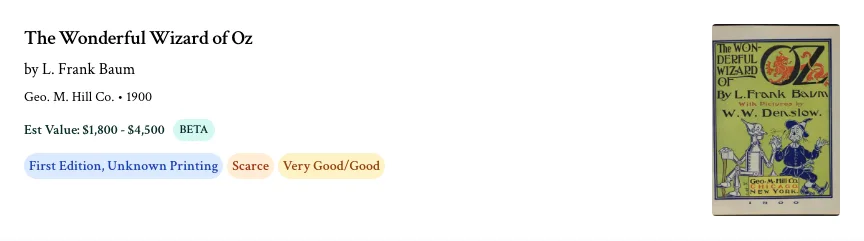
Value comes from a few specific things: the edition and printing (a true first printing is what collectors chase), collector demand, condition, and on collectible hardcovers the original dust jacket. One first edition in a jacket can outweigh an entire wall of common books.
Two reads that make the flagged pile quicker to judge:
Step 3: Identify and price the flagged books
For each book in the worth-a-look pile, confirm the exact edition and printing, then check what that version in that condition has actually sold for. Sold prices, not asking prices, tell you the real number.
The faster way to value a whole collection
Photographing and researching each flagged book by hand is the slow part.
FirstFolio is an AI tool that identifies and values old books from photos. You upload pictures of the cover, title page, and copyright page, and it identifies the edition and printing, grades the condition, and returns an estimated market value range in about 60 seconds. You can work through the maybe-valuable pile quickly and rank the books by what they are actually worth.
You can check two books free, no card required. Start valuing your collection.
What a collection is usually not worth
Size and age are not value. A wall of handsome leather-bound classics is often decorative reprints. Encyclopedia and condensed-set volumes are close to unsellable. Most of the books by count will be low value, and that is normal. It is not a disappointment, it just means the value concentrates in a few titles rather than spreading across the shelves.
After you value it
Sell the valuable few individually, and clear the common majority in bulk through a sale or donation. See Where to Sell Old and Rare Books. If the collection is large or a flagged book looks genuinely valuable, and it is heading to insurance or an estate settlement, a formal appraisal is worth it. See How to Get a Book Appraised.
Frequently asked questions
How do I value an inherited book collection? Triage rather than appraise everything. Sort into common, possibly valuable, and unsure, then identify and price only the flagged books against real sold prices.
Are old book collections valuable? Usually the value sits in a handful of titles, not the whole collection. Most books in any library are common and worth little, while a few firsts or signed copies can carry nearly all the value.
Should I get a whole collection appraised? Only if triage turns up genuinely valuable books, or you need documentation for insurance or an estate. Paying to appraise hundreds of common books is money lost.
What do I do with the books that are not worth much? Sell them in bulk or donate them. See Where to Sell Old and Rare Books for the options by value.
Related reading: