Is My Old Book Worth Anything? How to Find Out
A plain guide to finding out if your old book is worth money. What actually drives value, the quick checks anyone can do, and the common myths that make people overestimate.
Robin Swain
Author
A person holding an old hardcover book near a window.
You have an old book and one question: is it worth anything?
Here is the part most people get wrong before we start. Age does not make a book valuable. There are plenty of 200-year-old books worth a few dollars and plenty of books from the 1990s worth thousands. Value comes from a specific combination, and you can check most of it yourself in a few minutes.
This guide covers what actually drives value, the quick checks to run, the myths that lead people to overestimate, and how to get a real number.
The short answer
An old book is worth money when three things line up:
- Rarity. A small original print run, or few surviving copies.
- Demand. Collectors actively want this title or author.
- Condition. Clean, intact, and ideally with its original dust jacket.
If even one of those is missing, value usually drops fast. A rare book nobody wants is cheap. A wanted book that is common is cheap. A wanted, rare book in poor condition is worth a fraction of the same book in fine condition.
What actually makes a book valuable
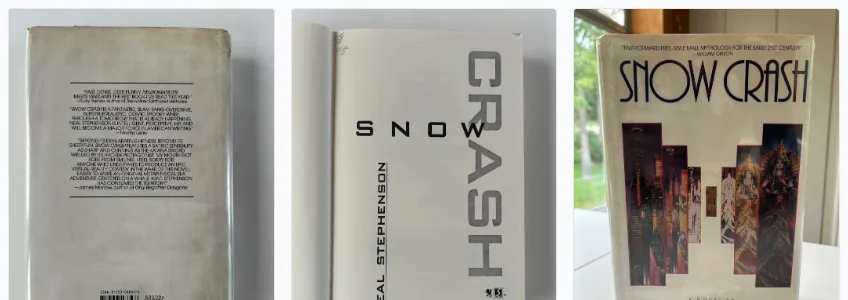
A true first printing. The first print run of the first edition is the version collectors chase. Later printings of the same title are usually worth far less. You check this on the copyright page. See How to Tell If a Book Is a First Edition.
The original dust jacket. On collectible hardcovers the jacket can be most of the value. The same first edition can be worth many times more with its original, unclipped jacket than without it.
A signature or inscription. A genuine author signature can lift value sharply. An inscription to a named stranger usually adds less than a clean signature, and a forged one adds nothing.
Condition. Booksellers grade from Fine down to Poor. Foxing, water damage, a cracked spine, missing pages, and writing inside all pull the grade and the price down.
What does not make a book valuable
This is where most overestimates come from.
- Age alone. Common titles printed in huge numbers stay cheap no matter how old. Old Bibles and encyclopedia sets are the classic example, often worth little despite their size and age.
- Leather binding. A handsome leather cover looks valuable and frequently is not. Decorative reprints were bound in leather by the thousand.
- Book club editions. These copy the look of a first edition but are a separate, low-value printing. Tells include a blind stamp on the back cover and no price on the jacket.
- Ex-library copies. Stamps, pockets, and labels from a library generally cut collector value hard.
- A famous title in a late printing. A first printing of a classic can be worth thousands. A tenth printing of the same book is often worth a few dollars.
None of this means your book is worthless. It means age and looks are not the test. The marks are.
How to get an actual number
Once you know what you have, there are three ways to find what it is worth.
Compare real sold prices. Look at completed sales on used and rare book marketplaces for the same title, edition, and condition. Asking prices can be wishful. Sold prices are the truth.
Use a tool. FirstFolio is an AI tool that identifies and values old books from photos. It reads the cover, title page, and copyright page, identifies the edition and printing, grades the condition, and returns an estimated market value range in about 60 seconds. It is built to do exactly the checks above without you learning bookseller shorthand first.
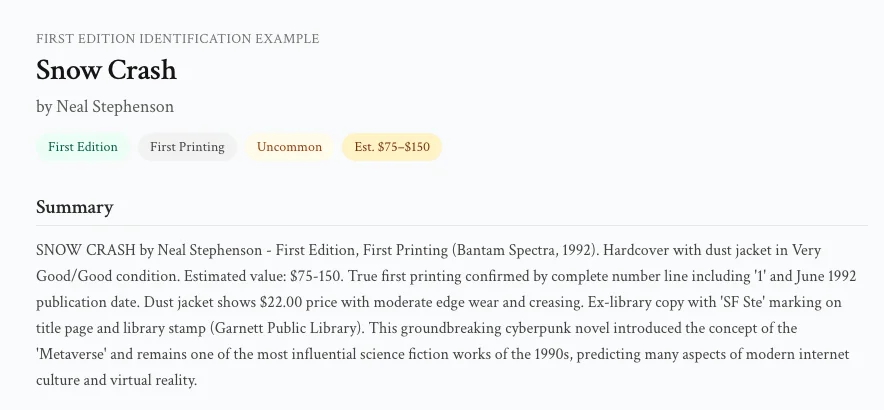
You can check two books free, no card required. Find out what your book is worth.
Get a professional appraisal. Worth the cost when a tool or marketplace check suggests real money, the book is going to insurance or a sale, or the identification is genuinely ambiguous. For a five-dollar book it is not worth it.
When a book is worth a real appraisal
Pay for a human appraisal when:
- A free check puts the value in the hundreds or higher.
- You are insuring, selling at auction, or settling an estate.
- The edition is contested and the difference between printings is large.
For everything else, photos and a marketplace comparison get you a reliable enough range.
Frequently asked questions
Does the age of a book determine its value? No. Age alone does not make a book valuable. Value depends on rarity, collector demand, and condition. Many very old books are common and worth little.
Are old leather-bound books valuable? Often not. Decorative reprints were mass-bound in leather. The binding looks valuable but the printing inside is what sets the price.
How can I find out what my old book is worth for free? Check completed sold listings for the same title, edition, and condition on rare book marketplaces, or upload photos to a tool like FirstFolio for an estimated value range in about a minute.
Is an old family Bible worth money? Usually not much. Family Bibles were printed in large numbers. They carry real sentimental value, but collector value is typically low unless the edition is genuinely rare.
When should I pay for a professional book appraisal? When a quick check suggests the book is worth hundreds or more, or when you are insuring, auctioning, or settling an estate.
Related reading: