Where to Sell Old and Rare Books
The right place to sell a book depends on what it is worth. Here are the best venues for valuable, mid-value, and common books, and how to match the book to the venue.
Cub McKinnon
Author
A stack of old hardcover books beside an open laptop on a wooden desk.
You have books to sell and you want to know where to actually sell them. The right answer comes down to one thing: what the books are worth.
Sell a $500 first edition the same way you offload a box of old book club novels and you lose money on the good one and waste hours on the rest. The trick is matching the book to the venue.
Here is where to sell, sorted by what you have.
The short answer
- One genuinely valuable or rare book: a specialist rare book dealer, or an auction house if the value is high.
- A few mid-value collectibles you can identify: eBay, or a rare book marketplace like AbeBooks or Biblio.
- A box of common old books: a bulk sale, a local used bookstore, or donation. Listing them one at a time is not worth the hours.
- A whole inherited library: triage it first, find the few books that matter, sell those individually, and clear the rest in bulk.
The step most people skip is the first one: find out what each book is worth before you choose where to sell it. See Is My Old Book Worth Anything?.
Know what you have before you sell
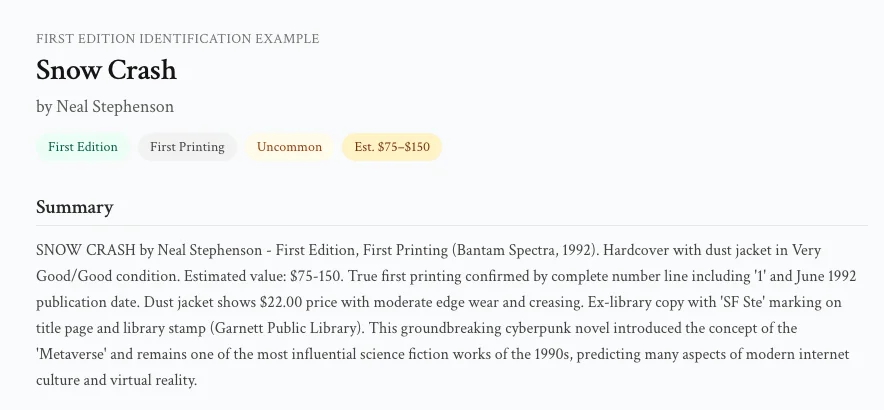
Value decides the venue, so settle value first. It comes from the edition and printing, collector demand, condition, and on collectible hardcovers, the dust jacket. A first printing in its original jacket is a different object from a later printing without one, even when they look identical on the shelf.
Two quick reads if you are not sure what you are holding:
A five-dollar book and a five-hundred-dollar book do not go to the same place. Once you know roughly which it is, the venue picks itself.
Specialist rare book dealers
Best for: a genuinely rare or valuable book you want handled by someone who knows the market.
You have two options with a dealer. Sell outright and you get paid fast, but at a wholesale price, often somewhere around half of retail, because the dealer takes on the cost and risk of reselling. Consign and the dealer sells it for you for a cut, which usually nets you more but takes longer. Look for established sellers, for example members of the Antiquarian Booksellers' Association of America (ABAA).
Auction houses
Best for: high-value or notable books with broad collector demand.
Houses like Heritage, Bonhams, and Sotheby's, along with regional auctioneers, sell to competing bidders. They charge the seller a commission, commonly around 10 to 20 percent, and the process runs weeks to months from consignment to payment. Auctions shine when the value is high enough and the demand wide enough to start a bidding contest. For a $40 book, the commission and wait are not worth it.
eBay
Best for: mid-value collectibles you can identify and ship yourself.
eBay has the largest pool of buyers, which is its real advantage. You create the listing, ship the book, and eBay takes a final value fee on each sale. Price it by checking completed, sold listings for the same title, edition, and condition. Sold prices are the truth; asking prices are wishful. This is the right home for most books worth roughly tens to a few hundred dollars.
AbeBooks and Biblio
Best for: sellers with a lot of books or an ongoing supply.
These marketplaces reach buyers who specifically want used and rare books, which is valuable intent. The catch is that they are built for established booksellers. Selling means a seller account, a monthly subscription, and a commission on each sale (AbeBooks, for instance, charges a monthly fee plus a commission of around 8 percent). Worth it if you have inventory or plan to keep selling. Overkill for a single title.
Local used bookstores and bulk options
Best for: clearing common books quickly.
A local used bookstore is fast and simple, but expect pennies on the dollar or store credit, since they are buying to resell. For boxes and shelves of common books, Facebook Marketplace and local listings let you sell a whole lot with local pickup and no shipping. The value there is in the volume, not any single title.
Most old books are not worth selling one by one
This is the honest part. Common titles in late printings, ex-library copies, book club editions, old encyclopedia sets, and family Bibles were printed in huge numbers and stay inexpensive. The time it takes to photograph, list, and ship a four-dollar book costs more than the book.
For those, the smart moves are a bulk sale, a donation (often with a tax receipt), or simply keeping the ones you care about. If you are working through a whole estate, sort before you sell. See What to Do With a Box of Inherited Books.
The faster way to know which bucket you are in
The whole decision hinges on value, and that is the part that takes experience to judge.
FirstFolio is an AI tool that identifies and values old books from photos. You upload pictures of the cover, title page, and copyright page, and it identifies the edition and printing, grades the condition, and returns an estimated market value range in about 60 seconds. In other words, it tells you whether each book is an auction book, an eBay book, or a donation, before you spend time listing anything.
You can check two books free, no card required. Find out what your book is worth.
Frequently asked questions
Where is the best place to sell old books? It depends on value. A genuinely rare book goes to a dealer or auction house. A mid-value collectible does best on eBay. A box of common books is for a bulk sale, a used bookstore, or donation.
Where can I sell rare books for the most money? For a truly valuable book, consignment with a specialist dealer or a sale at auction usually nets the most, after commission and a wait. Selling outright to a dealer is faster but pays a wholesale price. Get the value confirmed first so you can judge the offers.
Can I sell old books on Amazon? Yes, through its marketplace, but it is competitive and fee-heavy and suits common used books in print better than rare ones. Genuinely rare or collectible titles tend to do better on eBay or a specialist site.
How do I sell a single valuable book? Confirm what it is and what it is worth, then take it to a rare book dealer, or to auction if the value is high and demand is broad. Avoid dumping a valuable book into a bulk sale by mistake.
What should I do with a whole collection of inherited books? Triage first. Identify the few that have real value, sell those individually, and clear the common majority in bulk. See What to Do With a Box of Inherited Books.
Related reading: