How to Get a Book Appraised
There is a difference between a quick value estimate and a formal appraisal. Here are your options, what each costs, and how to pick the right one for your book.
Robin Swain
Author

An old book open on a desk beside a magnifying loupe and reading glasses.
You want to get a book appraised. Before you pay anyone, answer one question: do you need a number, or do you need a document?
Most people who search for this just want to know what the book is worth. That is a valuation, and you can often get it free. A formal appraisal is a signed document you pay for, and you only need it in specific situations like insurance, an estate, or a tax deduction.
Here are your options, from free to formal, and how to pick the right one.
The short answer
- Free estimate: use a tool like FirstFolio, or check completed, sold listings for the same book. Best for "is this worth anything."
- Paid online appraisal: services like Mearto give a remote valuation for around $25 per item in a day or two. Best for a mid-value book when you want a second opinion.
- In-person expert: a rare book dealer will often give an informal opinion for free if they might buy it. Best for a book that looks genuinely valuable.
- Formal qualified appraisal: a signed report from a qualified appraiser, priced by the hour or as a flat fee. Best, and sometimes required, for insurance, estates, donations, and legal matters.
Do you need an estimate or a formal appraisal?
This is the fork that saves you money.
An estimate answers "what is it worth." It is enough for deciding whether to sell, what to ask, or whether a book is worth more attention. It can be free.
A formal appraisal is a written, signed document from a qualified appraiser. You need one when a third party has to trust the number: insuring a valuable book, settling an estate, donating for a tax deduction, or a legal dispute. It costs real money, so you only want it when the situation calls for it.
If you are not sure which you need, start with an estimate. It often tells you the book is not valuable enough to need an appraisal at all.
Free: get a fast estimate yourself
Two ways, no cost.
Use a tool. FirstFolio is an AI tool that identifies and values old books from photos. You upload pictures of the cover, title page, and copyright page, and it identifies the edition and printing, grades the condition, and returns an estimated market value range in about 60 seconds. It is built to be the fast, free first step before you decide whether to pay anyone.
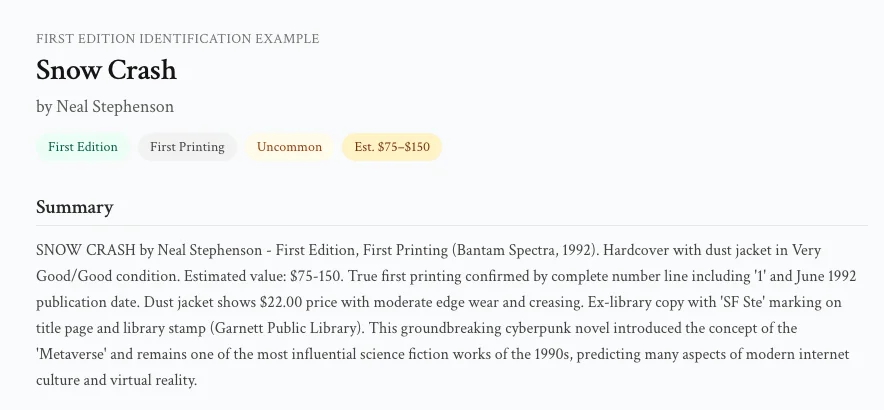
You can check two books free, no card required. Get an estimate for your book.
Compare sold prices. Look up completed, sold listings for the same title, edition, and condition on used and rare book marketplaces. Sold prices are real; asking prices are wishful. This takes longer but costs nothing.
Paid online appraisal services
If you want a human opinion without leaving home, online appraisal services value a book from photos for a set fee. Mearto, for example, charges around $25 per item and turns most appraisals around in a day or two, with bulk rates for several items.
This is a sensible middle step for a book that a free check suggests might be worth a few hundred dollars, where you want more confidence before selling. It is not worth $25 to appraise a $10 book.
In-person: dealers and certified appraisers
For a book that looks genuinely valuable, a person who handles rare books in real life is the most reliable read.
Rare book dealers will often give you an informal opinion at no charge, especially if there is a chance they would buy it. Look for established sellers, for example members of the Antiquarian Booksellers' Association of America (ABAA). Remember that a dealer who wants to buy has a reason to quote low, so treat a buying offer as one data point.
Certified appraisers give an independent valuation as a paid service, with no interest in buying. This is the path when you need impartiality or a formal document.
Formal qualified appraisal: insurance, estates, and taxes
When you need an appraisal that holds up to scrutiny, the appraiser matters as much as the number. Look for someone accredited by a recognized body such as the American Society of Appraisers (ASA), the International Society of Appraisers (ISA), or the Appraisers Association of America (AAA).
A few things to know:
- A qualified appraiser charges a flat or hourly fee, not a percentage of the value. A fee based on a percentage of the appraised value disqualifies the appraisal for IRS purposes.
- For a charitable donation of books worth more than $5,000, the IRS requires a written qualified appraisal and Form 8283. Above $500,000, the appraisal must be attached to your return.
- For insurance or an estate, the appraisal documents replacement or fair market value so the figure is defensible later.
This is the most expensive option, and for most single books it is overkill. Reserve it for genuinely valuable books and situations that require paperwork.
Most books do not need a paid appraisal
Here is the honest part. The majority of old books people want appraised are common titles, late printings, or sentimental keepsakes worth a few dollars. A free estimate is all they need, and often all they will ever justify.
Paying $25, or far more, to appraise a book worth $10 is money lost. Spend on an appraisal when the value, or the insurance, estate, or tax situation, actually warrants it. For everything else, a free check is enough.
The faster way to decide
Almost every path above starts with the same question: what is this book roughly worth? Answer that first and the rest of the decision is easy.
FirstFolio gives you that number in about a minute from a few photos, free for your first two books, so you can tell whether your book needs nothing more, a quick paid second opinion, or a full formal appraisal. Find out what your book is worth.
Frequently asked questions
How do I get a book appraised for free? Upload photos to a tool like FirstFolio for an estimated value range, or compare completed, sold listings for the same title, edition, and condition. Both cost nothing and are enough for most books.
How much does a book appraisal cost? An online appraisal service runs around $25 per item. A formal appraisal by a certified appraiser costs more, usually billed hourly or as a flat fee, never as a percentage of the value.
What is the difference between an appraisal and a valuation? A valuation is an estimate of worth. A formal appraisal is a signed document from a qualified appraiser, used when insurance, an estate, taxes, or a court needs a number they can trust.
When do I need a formal appraisal? When you are insuring a valuable book, settling an estate, donating books worth more than $5,000 for a tax deduction, or involved in a legal matter. For simply deciding whether to sell, an estimate is enough.
Who can appraise rare books? Rare book dealers (often informally), online appraisal services, and certified appraisers accredited by bodies like the ASA, ISA, or AAA. For a formal appraisal, use an accredited appraiser.
Related reading: