What to Do With a Box of Inherited Books
Inherited a box of old books? A calm, practical guide to sorting them before you donate or toss anything, how to spot the few that might be worth real money, and what to do next.
Cub McKinnon
Author
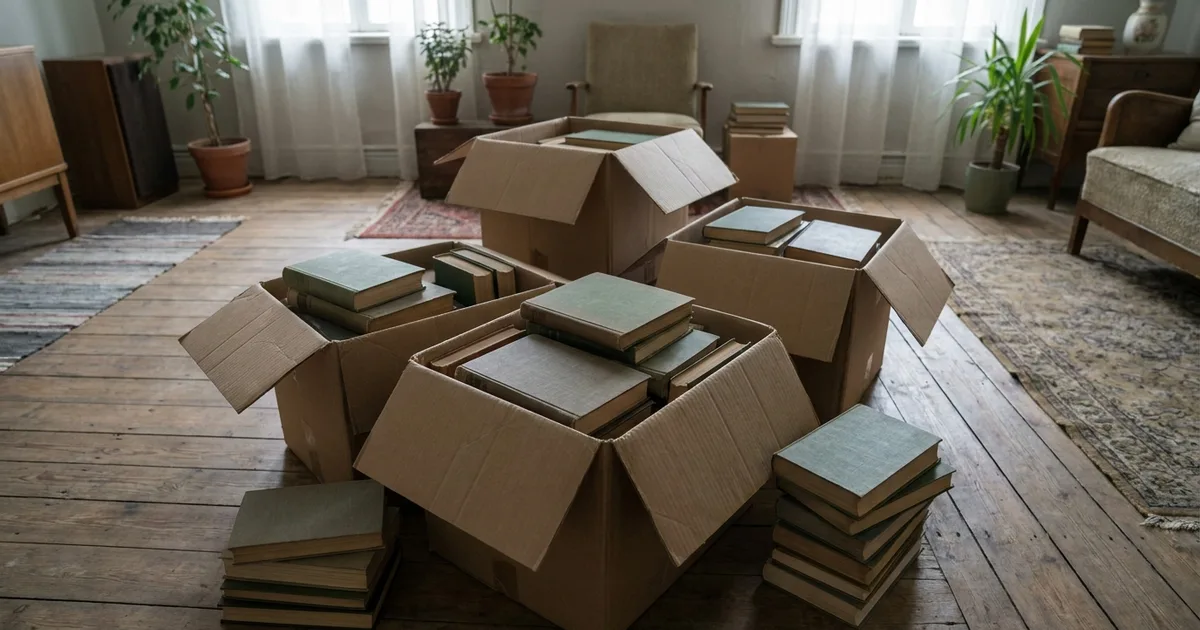
Boxes of inherited books on a floor, ready to be sorted.
Someone passed, or someone downsized, and now you have the books. A few boxes, maybe a few shelves. You do not want to throw away something valuable, and you do not want to spend a week becoming a rare-book expert to find out.
You do not have to. Most inherited libraries hold little of resale value, and the few books that matter give themselves away with a quick check. This guide walks through sorting a collection calmly, spotting the ones worth a closer look, and deciding what to do with the rest.
The short answer
To sort an inherited collection of books:
- Do not throw anything out yet. Some valuable books look unremarkable.
- Pull aside first editions, signed copies, anything with an original dust jacket, and unusually old or odd items.
- Set common categories aside as low value: book club editions, condensed sets, encyclopedias, common Bibles, ex-library copies, and worn paperbacks.
- Check the few standouts against sold prices or a valuation tool.
- Donate, sell, or keep the rest with a clear conscience.
Most of the work is sorting. The valuation only matters for the small pile that survives the sort.
Step 1: Resist the urge to clear it out fast
The most expensive mistake with an inherited library is rushing it to the donation bin or the dumpster. Plain-looking books can carry real value. A modern first edition in a dull jacket can be worth more than a thick, gold-tooled volume that only looks important.
Give yourself one sorting session instead. You are not appraising anything yet. You are just separating the maybe pile from the no pile.
Step 2: Pull aside the books worth a closer look
Set these apart as worth checking:
- First editions. Check the copyright page for a number line that includes a 1 and any "First Edition" statement. See How to Tell If a Book Is a First Edition.
- Signed or inscribed copies. An author signature can change the value sharply. Check the title page and the first few pages.
- Books with their original dust jacket. On collectible hardcovers the jacket carries much of the value, so an intact original jacket is a strong signal.
- Anything genuinely old or unusual. Pre-1900 printings, fine bindings on titles you recognize, maps, illustrated plates, or anything that looks hand-finished.
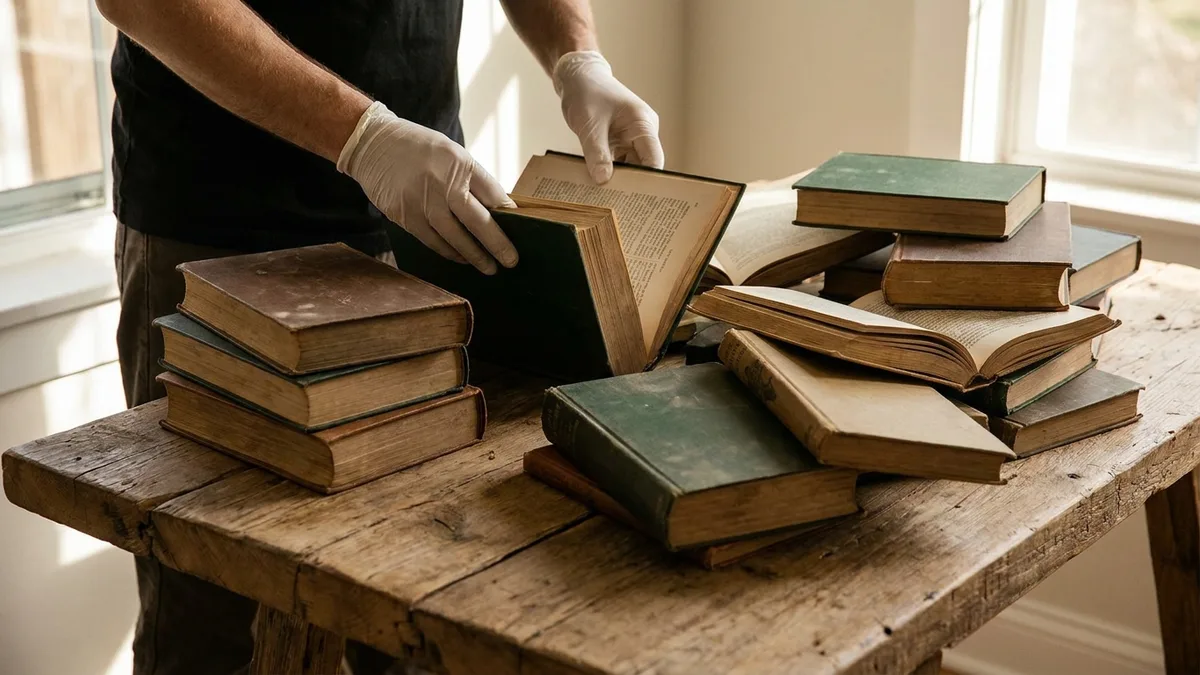
This pile is usually small. That is normal. A library of 300 books might yield five worth a second look.
Step 3: Recognize the low-value categories
These show up in almost every inherited collection and rarely carry resale value, no matter how heavy or old they look:
- Book club editions. Printed to look like first editions but a separate, low-value run. Tells: a blind stamp on the back cover and no price on the jacket.
- Condensed books and "best of" sets. Reader's Digest condensed volumes and similar sets were printed by the million.
- Encyclopedia sets. Almost always worth little, and hard even to give away.
- Common family Bibles. Real sentimental value, low collector value unless the edition is genuinely rare.
- Ex-library books. Stamps, pockets, and labels cut collector value hard.
- Worn mass-market paperbacks. Reading copies, not collector items.
Setting these aside is not throwing away value. It is clearing the noise so the standouts are easy to see.
Step 4: Check the standouts
For the small pile that is left, you want two facts per book: what it is (edition and printing), and what that version sells for in its condition.
Compare sold prices. Search completed, sold listings on rare and used book marketplaces for the same title, edition, and condition. Asking prices run high. Sold prices tell the truth.
Or check by photo. FirstFolio is an AI tool that identifies and values old books from photos. It reads the cover, title page, and copyright page, identifies the edition and printing, grades the condition, and returns an estimated market value range in about 60 seconds per book. For a stack of unfamiliar titles, it is faster than learning each publisher's quirks.
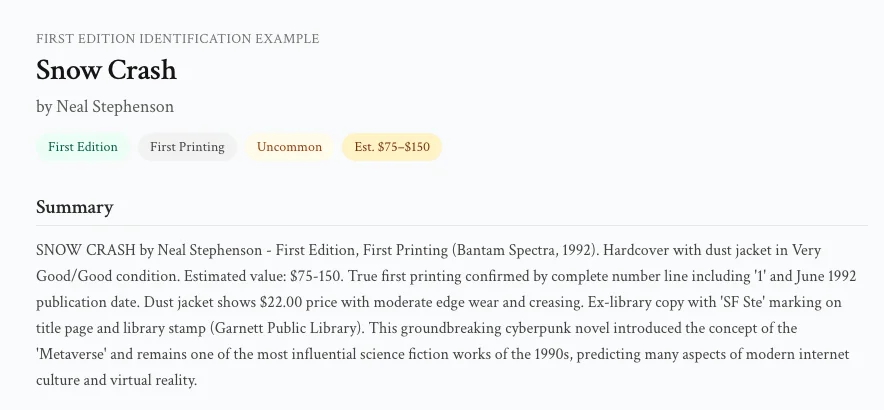
You can check two books free, no card required. Check a book in 60 seconds.
Step 5: Decide what to do with the rest
Once the standouts are checked, the rest of the collection has a clear path:
- Sell the valuable few through a rare book dealer, auction, or a marketplace listing, depending on the value.
- Donate the common books to a library sale, charity shop, or Little Free Library.
- Keep what means something to you. Sentimental value is real and does not need a price.
- Recycle the damaged ones. Mildewed or water-damaged books with no value are fine to let go.
If a book or two came back with a value in the hundreds or more, that is when a professional appraisal earns its cost, especially for insurance or a sale.
Frequently asked questions
Are inherited books usually worth money? Most are not. A typical inherited library holds mostly common editions worth little, with occasionally a few standouts. The value is concentrated in a small number of books, which is why sorting first matters.
What inherited books are most likely to be valuable? First printings of sought-after titles, signed copies, books with their original dust jacket, and genuinely old or finely made volumes. Check those closely and set the rest aside.
Should I throw away old books from an estate? Not before sorting. Plain-looking books can be valuable. Separate the standouts, check them, and only then decide what to donate, sell, or recycle.
How do I find the value of inherited books fast? Sort out the likely standouts, then compare sold listings for those specific editions or upload photos to a tool like FirstFolio for an estimated value range in about a minute per book.
Is an old encyclopedia set worth anything? Almost never. They were printed in huge numbers and are hard to sell or even donate. Sentimental value aside, treat them as low value.
Related reading: