Do Dust Jackets Affect a Book's Value?
On a collectible hardcover, the dust jacket is often most of what the book is worth. Here is how much it matters, why, and what a missing or clipped jacket does to the price.
Robin Swain
Author
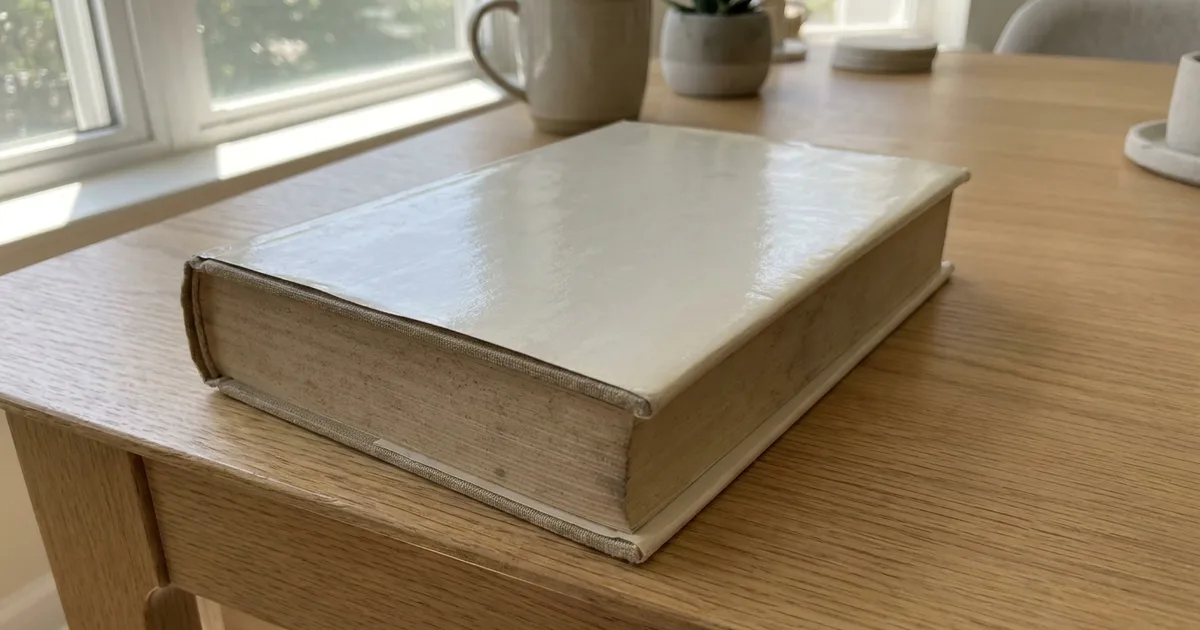
A hardcover book with its original printed dust jacket resting on a table.
You have a hardcover first edition and you are wondering how much the dust jacket matters. Maybe yours is missing, maybe it is torn, maybe a corner has been clipped off.
Here is the blunt version: on a collectible book, the jacket matters more than almost anything else. It is often most of the value, not a nice extra.
This guide covers how much it adds, why a flimsy piece of paper carries so much weight, and what specific flaws do to the price.
The short answer
- On most 20th-century first editions, the dust jacket accounts for roughly 80 to 90 percent of the book's value. This is a long-standing bookseller rule of thumb.
- The same first edition without its jacket is usually worth only 10 to 20 percent of what it would bring with one.
- The jacket's condition matters as much as its presence. Tears, fading, and a clipped price all pull the value down.
- It has to be the right jacket: the original first-edition jacket for that printing, not a later or reproduction one.
Why a piece of paper is worth so much
Dust jackets were designed to be thrown away. They protected the book on the shelf and in the shop, and most people discarded them or let them get torn, faded, and tossed. The cloth book survived. The jacket usually did not.
So for a given old title, far more copies exist without jackets than with. The book is common. The original jacket is rare. That scarcity is what drives the gap.
The clearest example is The Great Gatsby. A 1925 first edition without its jacket sells for a few thousand dollars. The same book with its original first-issue jacket has sold for six figures, including a record $377,000 at Sotheby's. The jacket, not the book, is the rare and valuable part.
How much value the jacket actually adds
Booksellers Allen and Patricia Ahearn set out the rule most of the trade still uses: for early-to-mid 20th-century fiction firsts, the absence of the jacket cuts the value by around 75 percent or more. Put the other way, the jacket is often 80 to 90 percent of the total.
A second example shows the scale. A first edition of Fitzgerald's Tender Is the Night runs around $6,000 with the jacket and a few hundred dollars without it. Same book, same printing, same condition inside. The jacket is doing almost all of the work.
This is why "I have a first edition" and "I have a first edition in its original dust jacket" are two very different statements.
What hurts a dust jacket's value
A present jacket is the start, not the finish. Condition decides how much of that 80 to 90 percent you actually keep.
Price-clipped. Someone has cut the corner off the front flap to hide the price, often a gift. Collectors want the original printed price intact. A clipped jacket is worth less than an unclipped one.
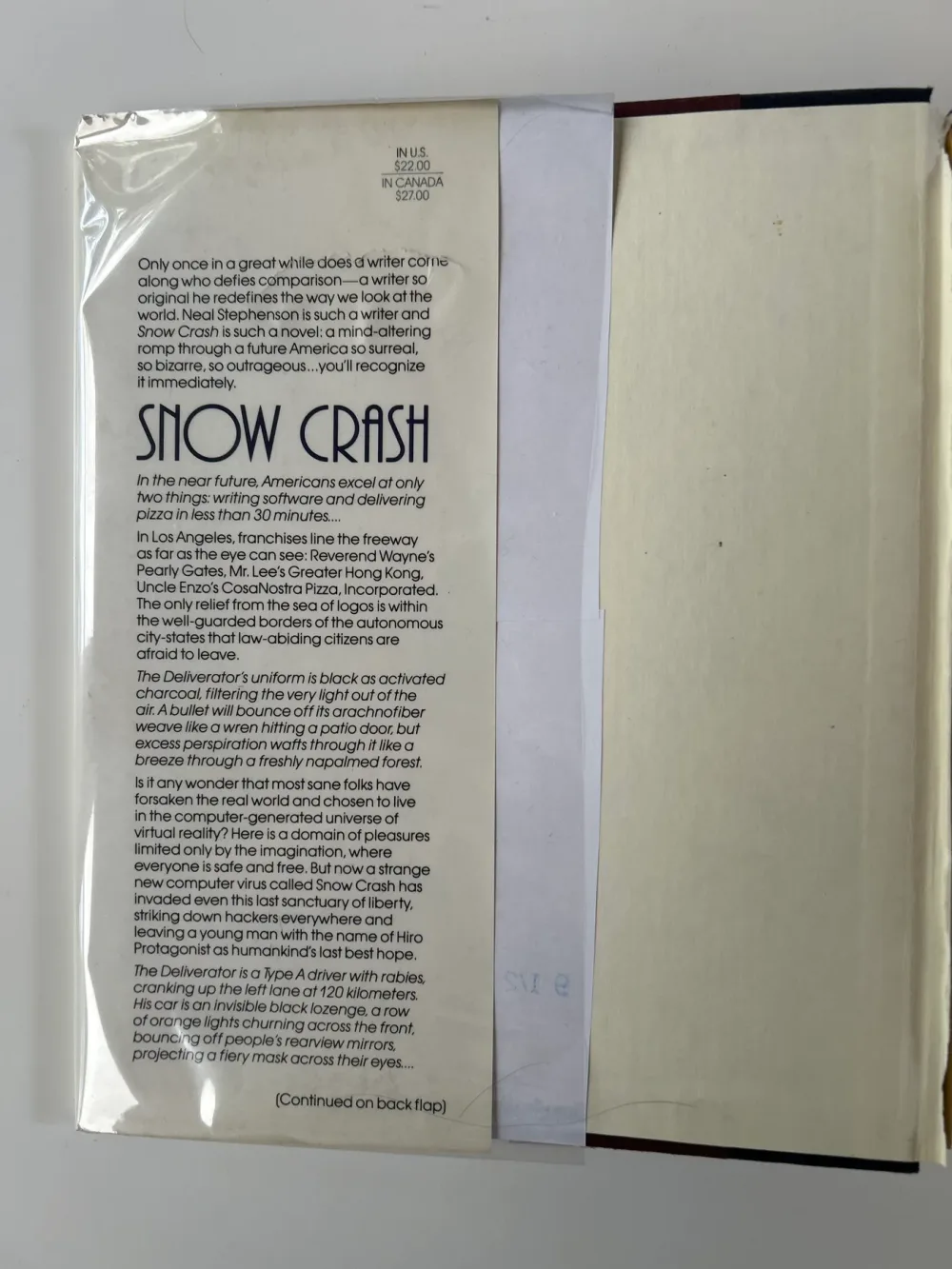
Tears, chips, and loss. Closed tears are better than chips, where paper is missing. Loss at the spine ends, called the head and tail, is common and counts against the grade.
Fading and sunning. Jackets fade with light, especially on the spine. A sunned spine where the title has gone pale is a frequent and noticeable flaw.
Tape and amateur repairs. Old cellophane tape stains and damages the paper over time. A clumsy repair often hurts more than the tear it was meant to fix.
The wrong jacket. A jacket from a later printing placed on a first edition book does not make it a first-edition jacket. Neither does a modern reproduction. Both should be disclosed as such.
When the dust jacket does not matter much
Not every book lives or dies by its jacket, and it is worth being honest about that.
- Books issued without one. Many older books, leather-bound sets, and some children's titles were never sold in jackets. There is nothing missing.
- Common titles in late printings. A tenth printing of a popular book stays cheap whether or not it has a jacket. The jacket multiplies value on a book that has value to begin with.
- Reading copies. If you want the book to read or to keep for sentiment, the jacket is about display, not money.
- Book club editions. These often come with a jacket, but the jacket carries no printed price and the edition itself is low value. The jacket does not rescue it.
The faster way to check what yours is worth
Working out the edition, then judging the jacket against the book, then finding a real price takes practice. You can skip the learning curve.
FirstFolio is an AI tool that identifies and values old books from photos. You upload pictures of the cover, the jacket, the title page, and the copyright page, and it identifies the edition and printing, grades the condition including the jacket, and returns an estimated market value range in about 60 seconds.
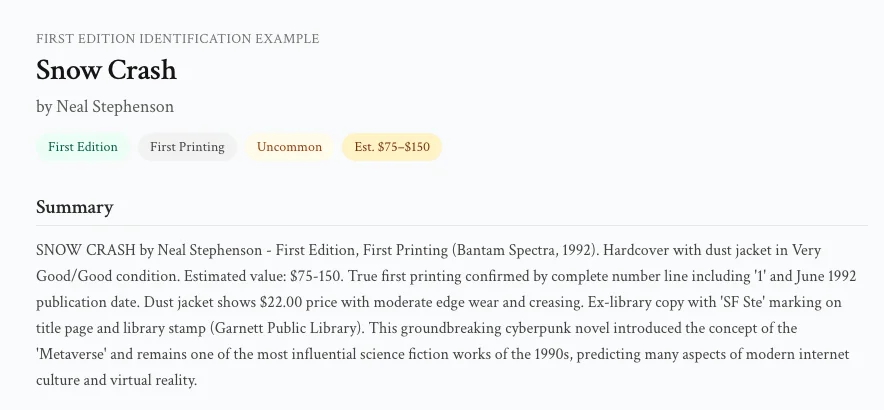
You can check two books free, no card required. Find out what your book is worth.
Frequently asked questions
Is a first edition worth less without the dust jacket? Usually a lot less. For most 20th-century firsts, a copy without its jacket is worth only about 10 to 20 percent of the same copy with the original jacket intact.
What is a price-clipped dust jacket? One where the corner of the front flap has been cut off, usually to remove the printed price. It lowers value because collectors want the original price present. The term you will see in listings is "price-clipped."
Does a torn dust jacket still add value? Often yes. A jacket with closed tears or light wear is still far better than no jacket at all. Missing pieces and heavy damage reduce how much it adds, but a present, identifiable original jacket almost always beats none.
Are reproduction or facsimile dust jackets worth anything? They make a book nicer to display and can protect it, but they add little collector value and must be disclosed when selling. A facsimile jacket is not the same as an original first-edition jacket.
How do I know if my jacket is the original first-edition jacket? Check that the price and the publisher details on the jacket match the first printing, and that the jacket has not been swapped from a later printing. The copyright page tells you the printing of the book. See How to Tell If a Book Is a First Edition.
Related reading: