Are Signed Books Worth More?
Usually yes, but how much more depends on the author, the form of the signature, and how many signed copies exist. Here is the honest math, plus how to spot the fakes.
Robin Swain
Author
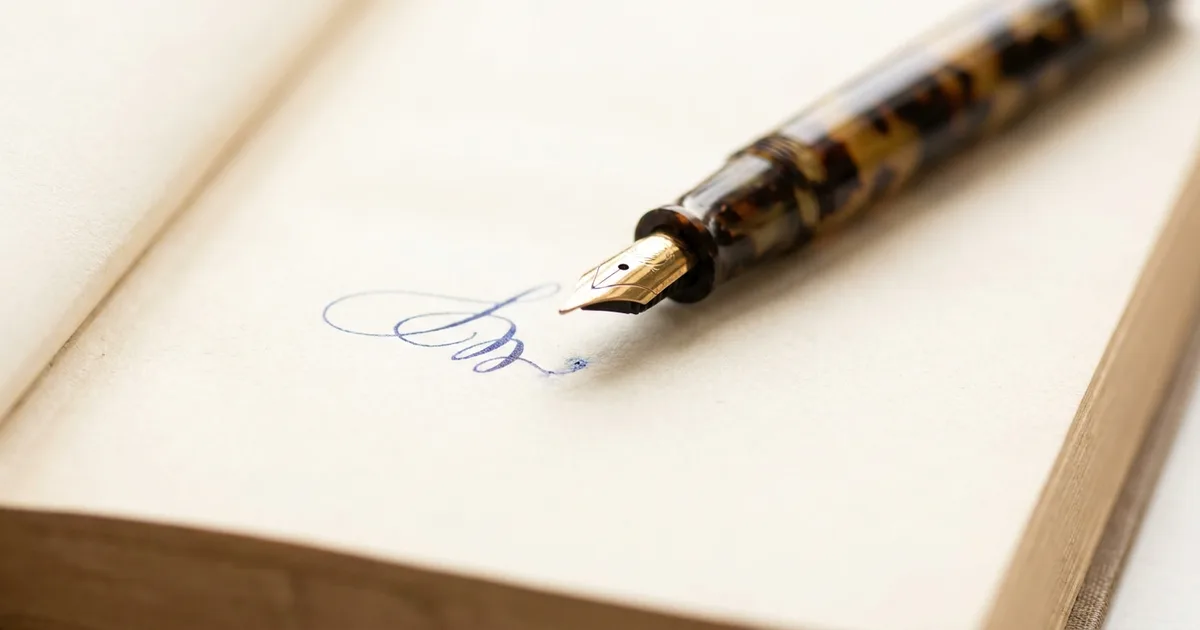
A fountain pen resting on the open title page of a book beside a fresh ink flourish.
You open the cover and there it is: the author's name in ink. Every part of you says this changes what the book is worth. Mostly, you are right.
But "signed" covers everything from a six-figure association copy to a book the author signed ten thousand times on tour, and the difference between those is the whole answer. Here is how the market actually treats a signature.
The short answer
- A genuine author signature usually raises a book's value, sometimes sharply.
- How much depends on three things: how collected the author is, how scarce signed copies are, and what form the signature takes.
- The trade convention: a plain "flat" signature is generally worth more than an inscription to a stranger. The exception, an association copy, beats both.
- Printed facsimiles and autopen signatures add nothing. The book was never in the author's hands.
Why a signature adds value at all
A signature turns a copy into an artifact: the author held this one. Collectors pay for that connection, which is why the premium tracks the author's collector demand, not their fame in general. It also tracks scarcity. An author who rarely signed leaves few signed copies, and each one carries a real premium. An author who signed constantly leaves the market saturated.
Flat-signed, inscribed, or association: the pecking order
Flat-signed means the author wrote their name and nothing else. Dealers generally consider this the most consistently desirable form: clean, impersonal, and easy for any collector to want.
Inscribed means a note plus the signature: "To Karen, happy reading." A warm thing to own if you are Karen. For everyone else, a stranger's name on the page, and inscribed copies to unknown recipients usually trail flat-signed copies in price.
Association copies are the exception that outranks everything: a copy inscribed to someone who mattered, the author's editor, a fellow writer, a famous owner. The inscription stops being noise and becomes history, and prices move accordingly. If the name in the inscription has a story, document it before you do anything else.
The honest part: most modern signed books carry modest premiums
Here is the section that saves you from overpricing. Modern publishing produces signed copies at industrial scale: signing tours, pre-signed tip-in pages, retailer signed editions printed in the tens of thousands. A signature on a popular contemporary novel is real and still only one of thousands, so the premium is real and modest.
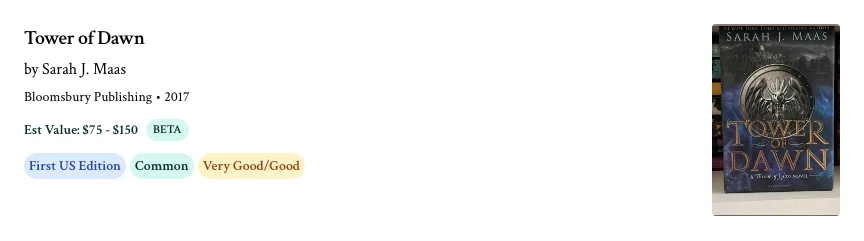
A live example from our own assessments: a signed first US edition of Sarah J. Maas's Tower of Dawn, a hugely popular author who has signed enormous numbers of books, in Very Good/Good condition. The estimate comes back at $75 to $150, a clear lift over an unsigned reading copy, and nothing like the multiples a scarce signature commands.
The rule of thumb: the more books an author signed, the smaller the bump. Scarcity, not ink, sets the price.
Fakes and false positives
Before you price a signature, make sure it is one:
- Printed facsimile signatures are reproduced in every copy of that printing. If the "ink" has no impression and appears identically in other copies, it is part of the book, not a signature.
- Autopen signatures are drawn by a machine. Common with politicians and celebrities; the tell is a slightly uniform, drawn line, and identical signatures across copies.
- Secretarial signatures were signed by staff, common for busy public figures.
- Certificates of authenticity mean little in the book trade on their own. What convinces dealers is provenance (where the copy came from) and comparison against known exemplars of the author's hand.
When real money is on the line, an experienced dealer or authenticator looking at the actual ink is the standard. See How to Get a Book Appraised.
What to do with yours
Photograph the signature close and straight, in good light. Note any provenance: a ticket stub from the signing, a letter, the original receipt, family history. Then identify what the book itself is, because a signature on a late printing is worth far less than the same signature on a true first. Start with How to Tell If a Book Is a First Edition.
FirstFolio is an AI tool that identifies and values old books from photos. Include a clear photo of the signature page and it factors the inscription into the assessment, alongside the edition, condition, and rarity. It cannot authenticate ink, no photo tool honestly can, but it will tell you what the book is and what the signed copy is likely worth if the signature is right.
You can check two books free, no card required. See what your signed book is worth.
Frequently asked questions
How much more is a signed book worth? Anywhere from a small premium to many multiples. It depends on the author's collector demand, how many signed copies exist, and the form: flat-signed and association copies lead, inscriptions to strangers trail.
Is a book worth more signed or inscribed? Convention says a plain signature beats an inscription to an unknown person. An inscription to someone connected to the author, an association copy, beats both.
Are books signed on tour worth anything extra? Yes, modestly. Tour and retailer signed editions are genuine but plentiful, so the premium is real but small. Scarcity drives the big numbers.
How can I tell if a signature is printed or real? Real ink sits on the page and often leaves a slight impression; a facsimile is flat and identical in every copy of that printing. Autopen lines look drawn and uniform. Comparison against known examples settles it.
Do certificates of authenticity matter for signed books? Not much in the rare book trade. Dealers weigh provenance and the signature itself. A COA from an unknown issuer adds close to nothing.
Related reading: